
.avif)
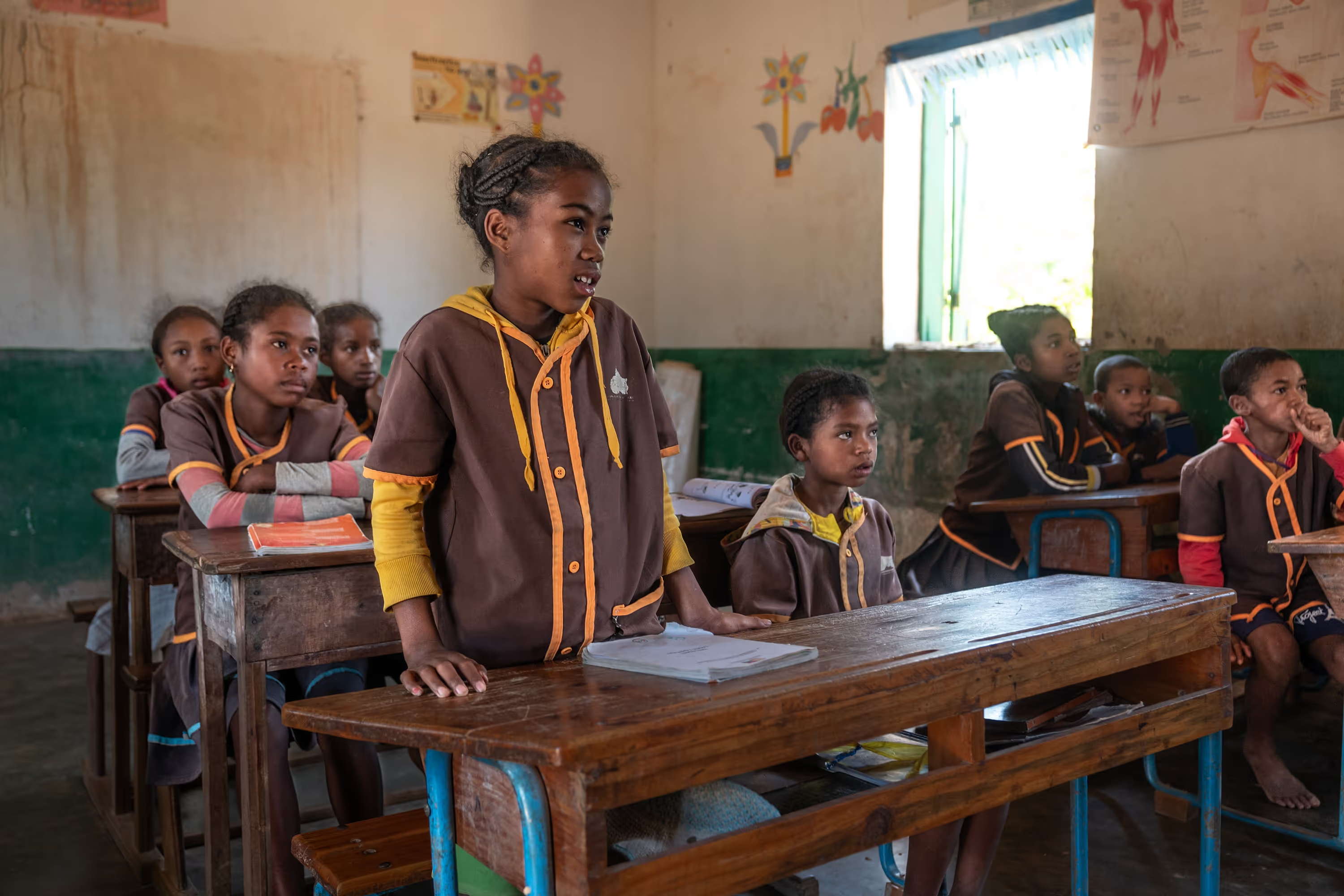
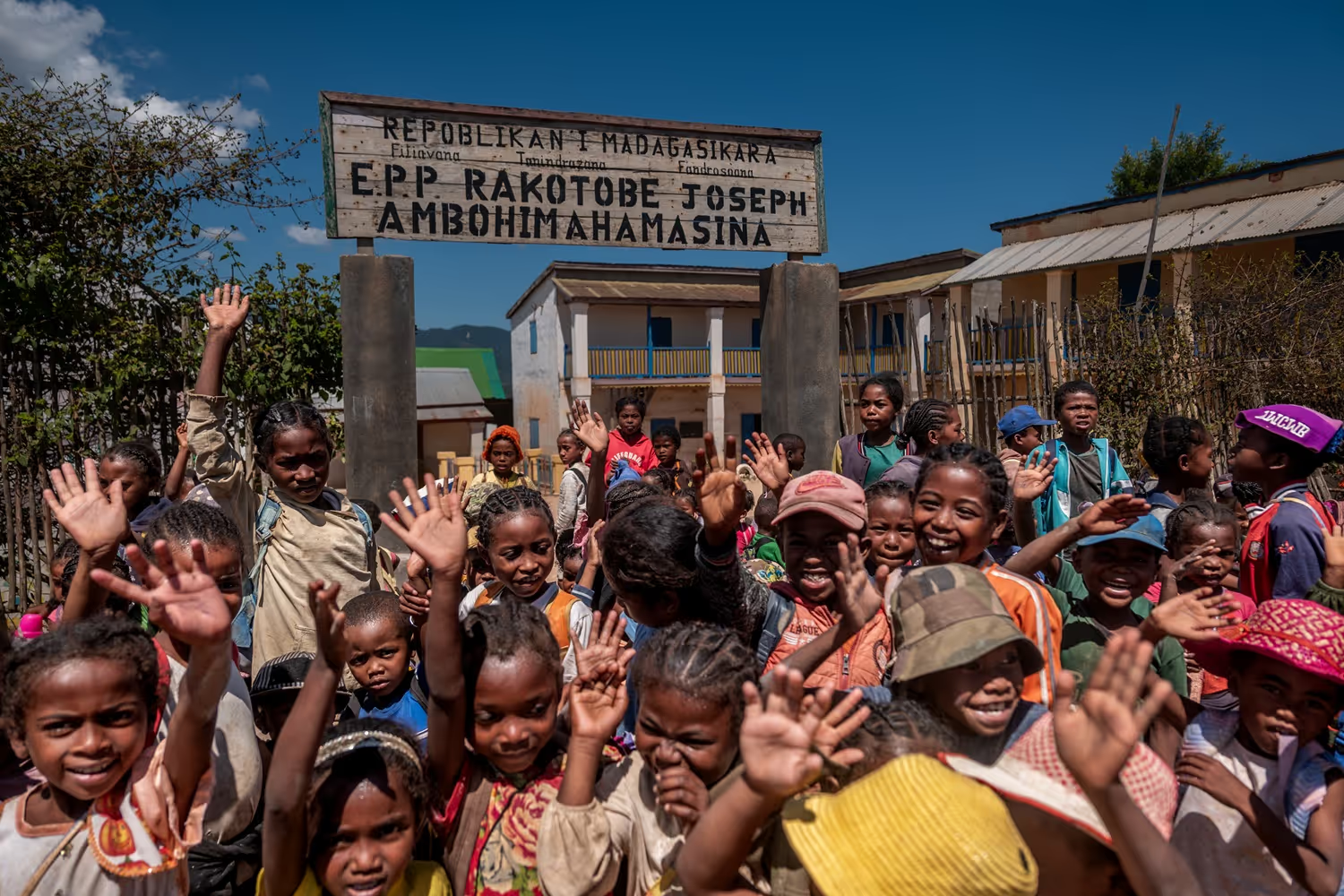
Every morning at 4:30 a.m., Razana Esther Marcelline is already awake. The 24-year-old president of the school feeding committee at EPP Rakotobe Joseph Primary School in Ambohimahamasina, in Madagascar’s Ambalavao district, has 580 children to feed. Once the school day begins, 13 parent volunteers will gather to cook, managing giant pots of rice and lentils for a community where, for many children, the midday school meal may be the most nutritious food they eat all day.
Until recently, this came at a steep environmental and human cost. Every student was expected to bring firewood from home every single day. The cooking took four hours, smoke filled the kitchen, and the surrounding forests paid the price. Today, thanks to a solar cooking solution piloted by Feedback Madagascar as part of Solar United Madagascar’s Clean Cooking programme, those burdens are being lifted.
Madagascar faces a persistent crisis of child malnutrition that ranks among the worst globally. According to the World Food Programme, chronic malnutrition affects nearly 40 percent of children under five, while an estimated 558,000 children are currently suffering, or at risk of suffering, from acute malnutrition. The Global Nutrition Report places Madagascar’s stunting rate at 39.8 percent — well above the African regional average of 30.7 percent.
School feeding programmes are a frontline response to this crisis. By ensuring that children receive at least one nutritious meal a day, they improve attendance, concentration, and learning outcomes — particularly for girls and children from the most marginalised households. But these programmes are only as reliable as the cooking systems that sustain them.
Unfortunately, in many cases, the very act of cooking for children is simultaneously a driver of the environmental degradation that threatens their futures. As of 2019, 99 percent of Madagascar’s population used firewood or charcoal as their primary cooking fuel, while only 2 percent of households had access to improved cookstoves. On a national scale, Madagascar consumes 18 million cubic metres of wood energy annually — nearly twice the sustainable production potential of its forests. For charcoal alone, production in just two regions (Atsimo Andrefana and Menabe) decimates an estimated 28,000 hectares of natural forest every year. The UN Joint SDG Fund estimates that 90,000 hectares of forest are lost nationwide each year, and that indoor air pollution from cooking fires contributes to over 26,000 deaths annually — disproportionately affecting women and young children.
Rural communities like Ambohimahamasina feel this pressure acutely. The programme team noted that the volume of firewood required to cook for nearly 600 children at EPP Rakotobe Joseph was unsustainable — a direct threat to the forests surrounding the community that local environmental initiatives sought to protect.
“Before we got the solar cooking stove, everything was so much harder. Every single student had to bring firewood from home every day.”
Razana Esther Maecelline, President, School Feeding Committee, EPP Rakotobe Joseph
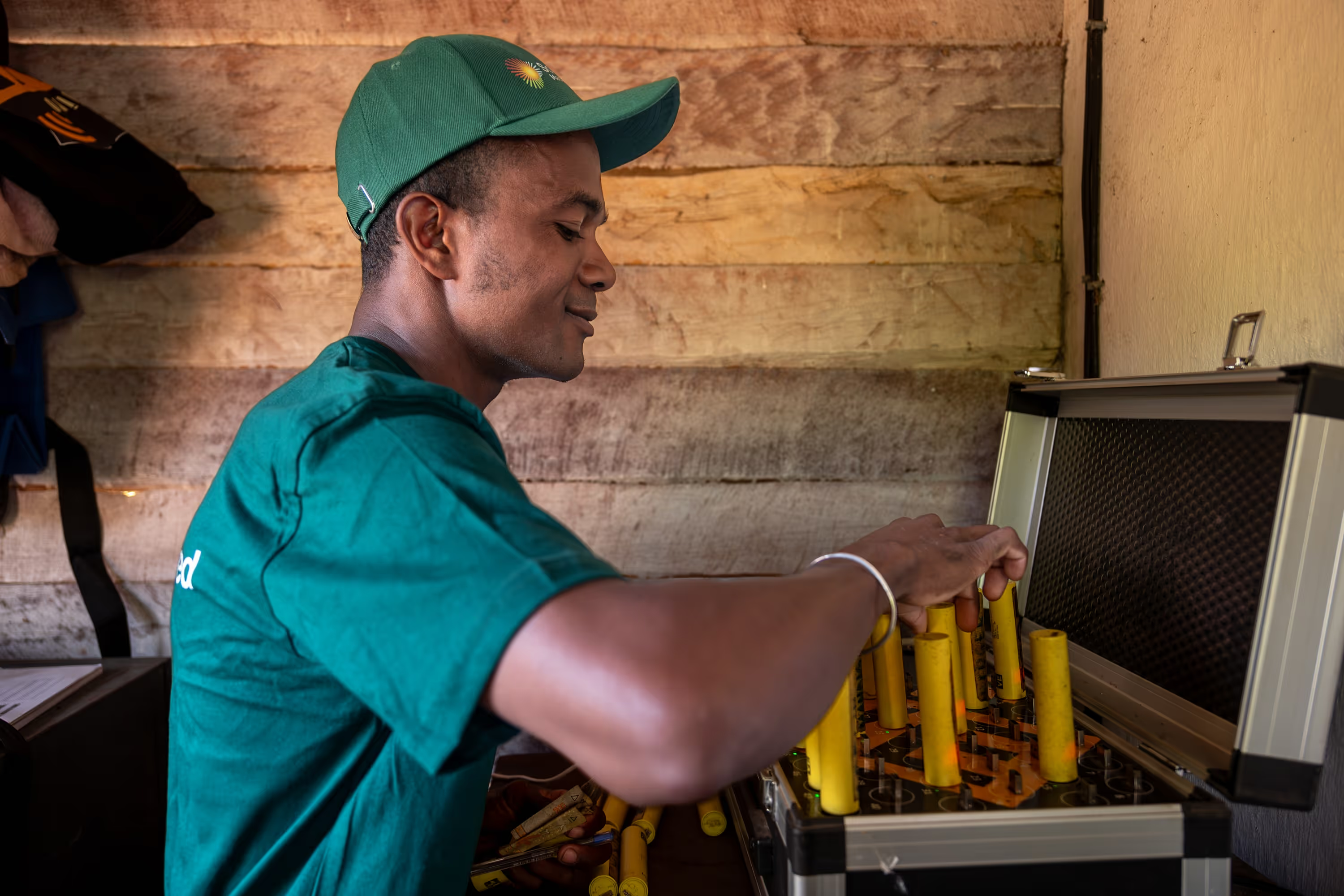
The clean cooking programme at EPP Rakotobe Joseph is part of a broader initiative linking school nutrition, clean energy access, and community resilience. Solar United Madagascar equipped the school with a solar electric cooker alongside complementary infrastructure: a new water reservoir to support cooking operations, and a solar lamp “light library” to extend the benefits of clean energy into students’ homes after dark.
The solar stove handles the most time-intensive task — cooking rice, which now takes around 90 minutes in the cooker instead of the previous four-hour cooking session. The traditional firewood stoves are still used in parallel for other dishes such as lentils, groundnuts, and vegetables. However, together, this hybrid approach has cut firewood consumption by approximately half.
For families, the change has been tangible. Students who once had to carry firewood to school every day now bring it just twice a week. For households already living on the margins, this reduction in the daily fuel burden matters enormously — in time, in money, and in the physical load borne by children and parents alike.
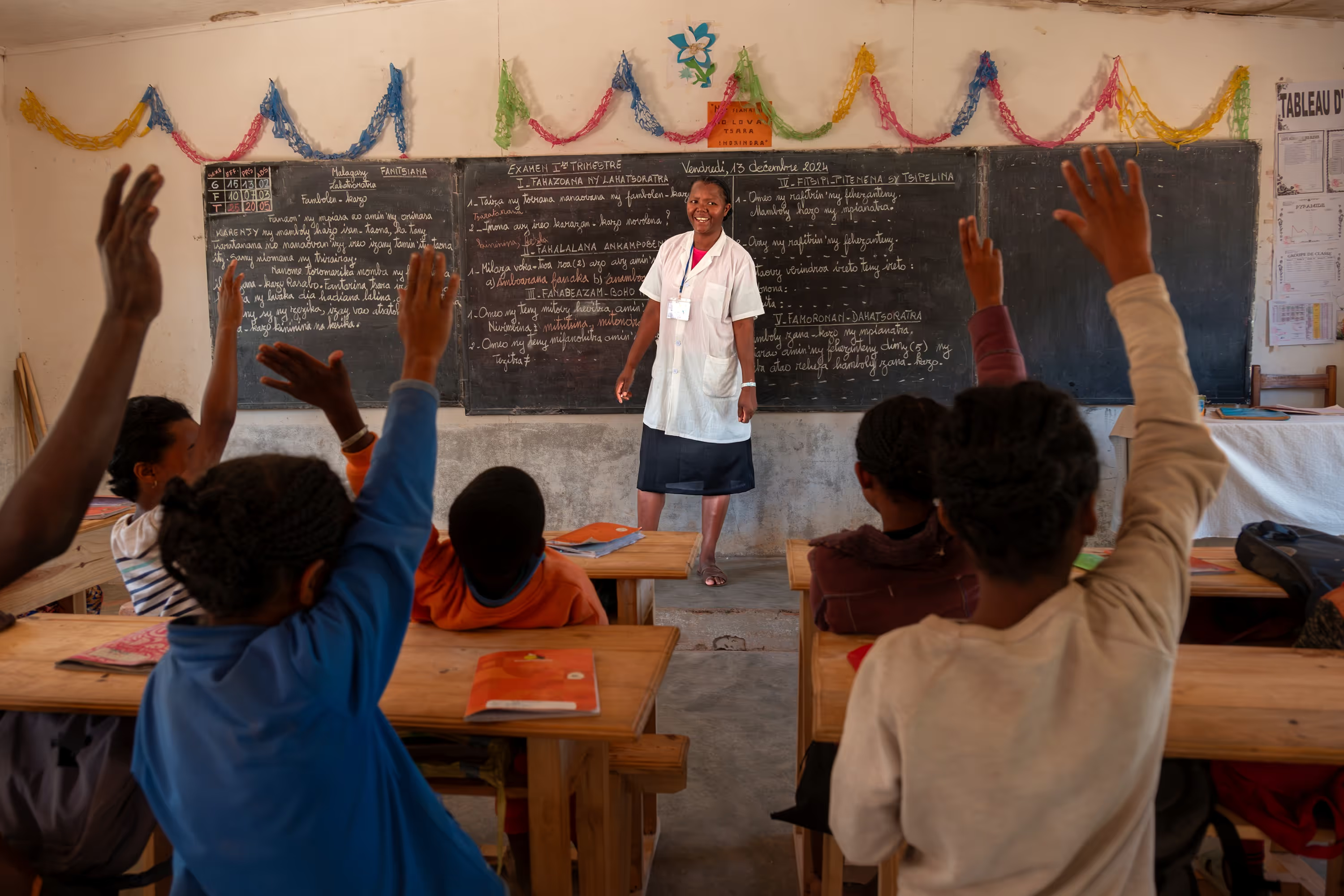
The 13 parent volunteers who cook each day have noticed a difference in their own wellbeing. Less smoke means less coughing, less eye pain, and a more tolerable working environment. Teachers and school directors report improved attendance among students – most likely a compounding effect of reliable meals and lighter household burdens.
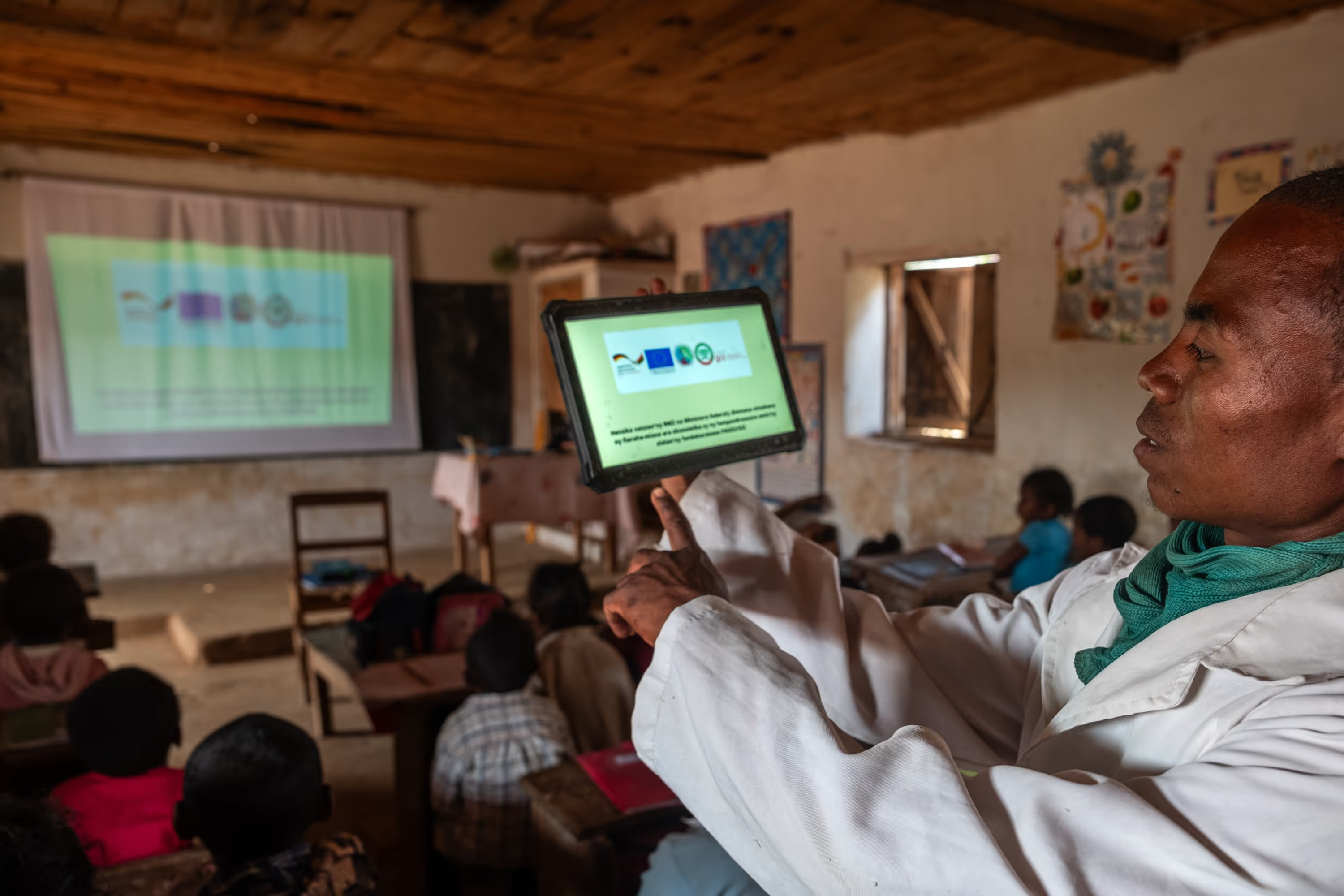
The programme’s integration into the school’s broader operations has also strengthened community ownership. The school feeding committee — active since 2019 — now manages not just the nutrition programme but the solar infrastructure as well. An initial three-to-four-day training was provided, covering both the theory of solar cooking and practical operation. After 18 months of use, the technology is now fully mastered by the community. Additional training in using the solar cooker for income-generating snack preparation has also opened modest new livelihood possibilities.
The school consistently maintains one of the lowest rates of meal interruptions among participating schools — a testament to the reliability of the system and the commitment of the community around it.
However, progress has not been without challenges. Early technical difficulties required patient troubleshooting and iterative support. During the rainy season, when solar generation dips, the school must revert to firewood stoves — a reminder that the transition to clean cooking remains partial, not yet complete.
As the programme scales, building deeper local technical capacity and clearer community governance structures will be essential to reduce dependency on external actors and ensure continuity beyond project cycles.
Madagascar’s national school feeding programme currently reaches 445,000 children in 1,245 primary schools, supported by WFP and the Ministry of National Education. If the model piloted at EPP Rakotobe Joseph can be standardised and replicated, the combined impact on deforestation, indoor air quality, and child nutrition would be substantial.
Achieving that scale requires attention to several enabling conditions: standardised equipment kits and training curricula; local financing mechanisms that reduce dependency on donor cycles; strengthened community ownership and governance; and robust monitoring frameworks capable of capturing both energy and nutritional outcomes.
The broader policy landscape is moving in a supportive direction. In March 2025, Madagascar’s Ministry of Energy and Hydrocarbons — with support from UNDP, UNCDF, and UNIDO — convened a national workshop to revise cookstove efficiency standards and expand the regulatory framework for clean cooking technologies. With only 2 percent of the population currently accessing clean cooking energy, and carbon emissions from biomass potentially reaching 22 million tons of CO₂ annually by 2030 without intervention, the urgency of the transition could not be clearer.
At 12 noon at EPP Rakotobe Joseph, nearly 600 children sit down for lunch. The rice was cooked with solar power. The air in the kitchen is cleaner than it was a year ago. The forests around Ambohimahamasina are, incrementally, under less pressure. And Esther — who was up at 4:30 to make it all happen — can see the difference not just in the kitchen, but in the faces of the children she feeds.
Clean cooking sits at the intersection of nutrition, health, environment, and education — the very dimensions that determine whether a child in rural Madagascar grows up with the capabilities to shape her own future.

Want to know more about our Light Libraries, Digital Learning programmes, or how to get involved? Please get in touch to discuss how you can help power positive change.
Contact Us