

SEED Madagascar – one of Solar United Madagascar (SUM)’s founding members – works in the Tolagnaro District of the Anosy region in southern Madagascar, running programmes in education, WASH, solar infrastructure, and livelihoods. The Digital Learning programme is part of SEED’s Project Masoandro and one of three SUM initiatives operating at the intersection of solar energy and community development.
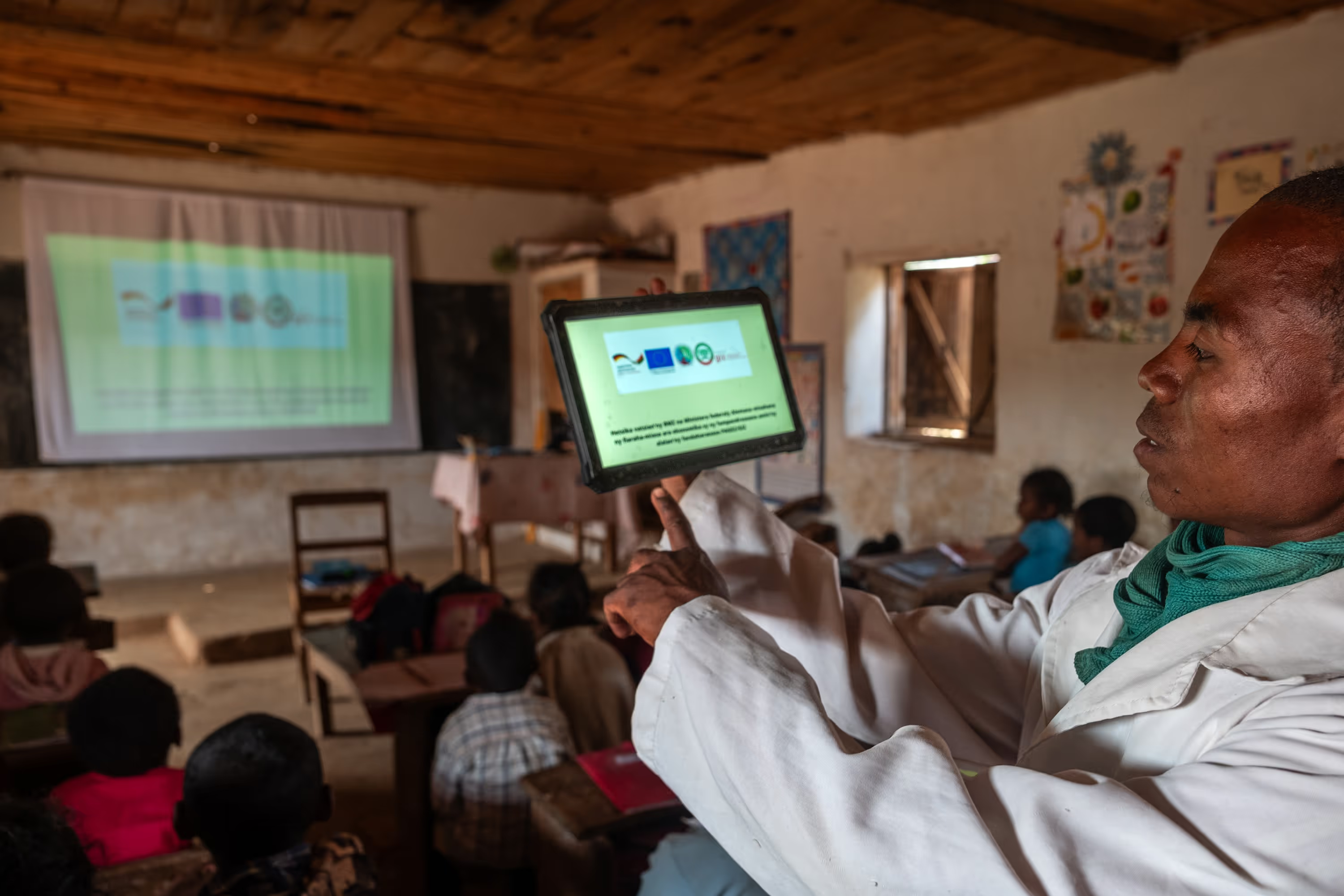
In a small school in the Anosy region of southern Madagascar, a teacher pulls up a projector, navigates on his tablet, and walks his class through the day's lesson. Just a year ago, this would have been unthinkable for Esperant, a teacher at EPP Emagnevy, one of SEED's three Digital Learning pilot schools.
The context in which he works is challenging. Of the 2,596 teachers at primary schools across rural Anosy, only 169 hold formal teaching qualifications. The majority are FRAM teachers - community-hired educators who receive irregular, low salaries and often balance teaching with farming or other livelihood activities. Teacher absenteeism runs at 38% in the Grand Sud region. On the student side, half of all 6–10-year-olds in Anosy have never attended school, with food insecurity, early marriage, and disease presenting persistent barriers to attendance.
SUM's Digital Learning initiative builds directly on its Light Library programme, which currently operates solar-powered community libraries in 78 communities across five regions of Madagascar — Analamanga, Itasy, Haute Matsiatra, Vatovavy, and Anosy.
SUM implements the Digital Learning programme through two models.
The Teacher Model equips schools with a Raspberry Pi — a centralised offline resource hub — alongside individual tablets, a projector, and a speaker, enabling teachers to incorporate audio-visual materials into lessons and access professional development content for self-guided learning.
The Student Model, developed in partnership with Onebillion, provides dedicated low-cost tablets used directly by students, delivering adaptive and personalised instruction in literacy and numeracy. Both systems are powered by the solar infrastructure already in place for the Light Library.
SEED currently implements the Teacher Model across three of its schools in the South.
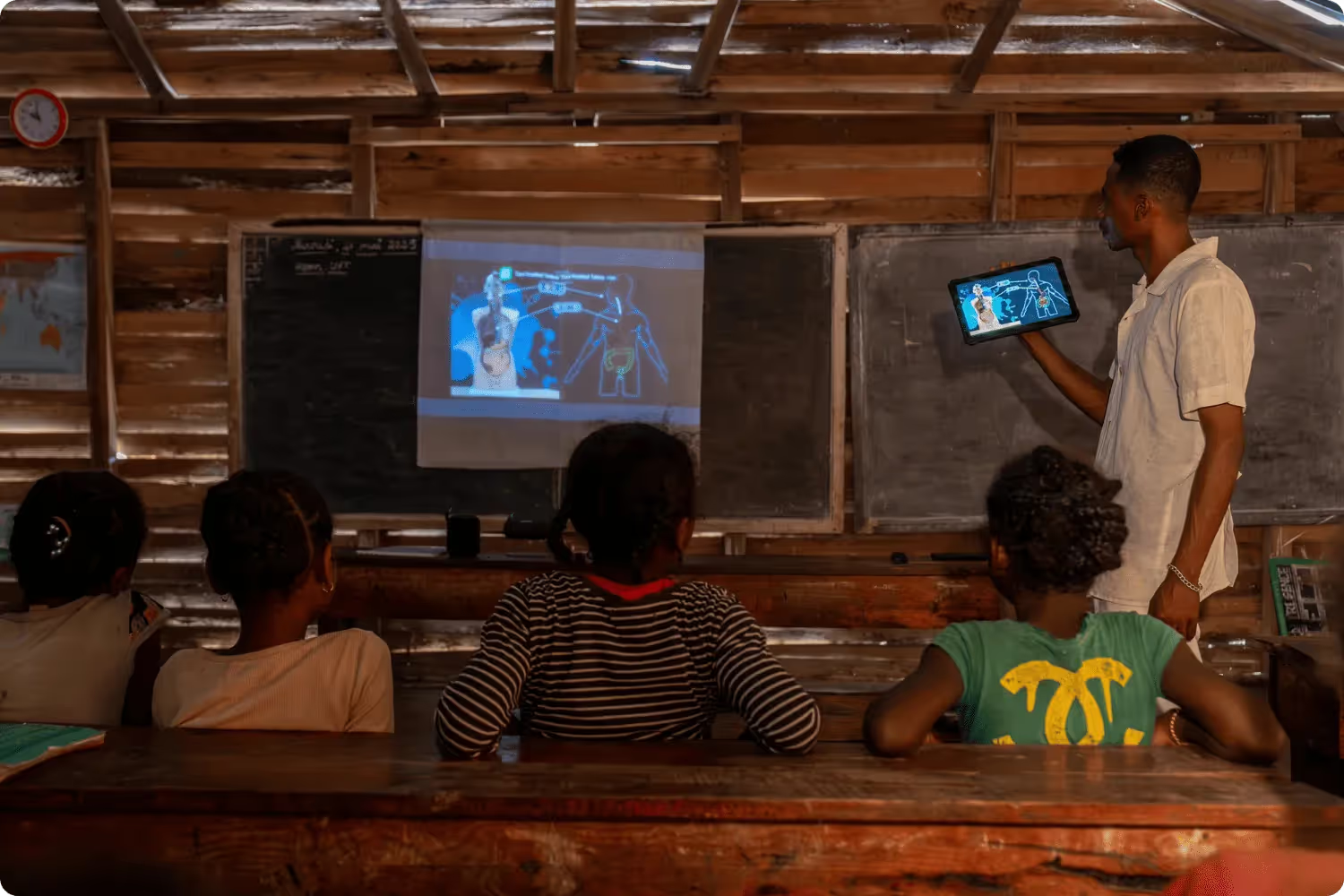
The programme is designed to help teachers improve lesson preparation and in-class teaching using resources on the Raspberry Pi, strengthen their understanding of pedagogical strategies and professional behaviour, as well as increase confidence and motivation. As a result, students' academic performance and engagement are expected to improve.
Since the beginning of the programme, the majority of teachers at SEED sites report using professional development materials on the tablet at least twice per week. They have gradually grown in confidence and understanding of how to use the Digital Learning resources, and some have become confident in helping other teachers in setting up and using the material.
Esperant, a teacher at EPP Emagnevy illustrates this trajectory. Despite being an experienced educator, he initially found it difficult to integrate the available resources into his teaching practice. Following training and ongoing support from SEED’ s team and Ministry educators, he has progressively expanded his use of the resources available on the platform. With growing skills and confidence, he now assists colleagues and has become an ambassador for the Digital Learning approach.
Students have also responded positively to digital learning tools, particularly video content, which sustains attention in ways that verbal instruction alone often cannot. Exam practice materials have also proved effective, particularly for older students preparing for the CEPE — the national primary school leaving examination that determines entry to secondary school. Resources on the platform are most closely aligned with the needs of this age group, and early indications suggest the programme has the greatest impact where students are preparing for this transition.
For SEED, there is however a significant challenge to the implementation of the programme in schools: the language barrier. The majority of resources on the Raspberry Pi are in French — the language of the national curriculum — but in rural Anosy, teachers and students primarily communicate in Malagasy and the local Antanosy dialect. French literacy among FRAM teachers is often limited, making many resources difficult to access in practice.
In response, the team has translated its technical guide into Antanosy and is exploring additional localisation of educational content. The team is also considering whether teachers should be permitted to take tablets home for lesson preparation — currently not allowed due to equipment security concerns — recognising that teachers are unable to remain at school after hours due to caregiving and livelihood commitments.
The Digital Learning programme currently reaches over 500 students and 24 teachers across SEED’s sites alone. SUM’s other two NGO members – Money for Madagascar and Feedback Madagascar – are implementing the programme across another 12 schools, reaching over 2,000 students and over 100 teachers in total.
Sustaining and scaling this reach will depend on addressing a number of structural challenges. Teacher capacity remains the most significant. FRAM teachers bring strong commitment and valuable community knowledge, but require additional support to fully utilise available resources, particularly in areas such as pedagogy and French-language instruction. Addressing this highlights the importance of ongoing investment in teacher training, support, and system-wide approaches that strengthen education delivery over time.
On language, a more extensive integration of resources in Malagasy and local dialects from the outset would reduce the most immediate barrier to access, and should inform the design of any future expansion.
Scaling of the programme will be supported by a formal partnership agreement with the Ministry of Education — a significant step towards the programme's long-term goal of national expansion. SUM is currently working with the Ministry to conduct a comprehensive assessment of the programme's impact on school performance, with results expected later this year.

.avif)

Want to know more about our Light Libraries, Digital Learning programmes, or how to get involved? Please get in touch to discuss how you can help power positive change.
Contact Us